

|
Description
| Manufacturer: | Lockheed | |
| Base model: | T-1 | |
| Designation: | T-1 | |
| Version: | A | |
| Nickname: | Seastar | |
| Designation System: | U.S. Tri-Service | |
| Designation Period: | 1962-Present | |
| Basic role: | Trainer | |
| See Also: | ||
Specifications
| Not Yet Available |
Operators (Past and Present)
| USAF | 12th FTW | Randolph AFB | TX |
| USAF | 14th FTW | Columbus AFB | MS |
| USAF | 47th FTW | Laughlin AFB | TX |
| USAF | 64th FTW | Reese AFB | TX |
| USAF | 71st FTW | Vance AFB | OK |
Known serial numbers
Examples of this type may be found at
| Museum | City | State |
| Pima Air & Space Museum | Tucson | Arizona |
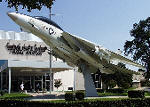
T-1A on display
Pima Air & Space Museum |
Recent comments by our visitors
| John Terschak Kill Devil Hills., NC | I was station at N.A.F. Andrews AFB Washing DC. 1965-1968. We had about 15 to 20 T1-As used for flight time for officers station around D.C.. The T1-A 144200 in the picture was just one of them. Others that I remember were 213, 168, 745, Now their scattered across the country. Nice seeing it again. 01/29/2016 @ 09:02 [ref: 69459] |
| J.Price Kilmarnock, VA | The T2V was redesignated as T-1a in 1962. Subsequently, a new build aircraft was designated as T-1A "Jayhawk" 04/18/2013 @ 05:18 [ref: 67745] |
| SDFSDAF, HI | Lee Ann Kennedy, 45, of Wellington is charged with posing as a state food inspector and steering the owners of businesses she inspected to a local pest control company. 12/27/2012 @ 20:38 [ref: 67444] |
| FASDJFL, LA | at LSU that also will result in a pay raise for one of the most successful coaches in the history of the Tigers' football program.
"I'm a LSU head coach and will be a LSU head coach for as long as I can be," Miles said Wednesday. 11/28/2012 @ 21:39 [ref: 67366] |
| akimmi , FL | [url=https://www.affordablewriting.net]Essay Writing[/url]
[url=https://www.affordablewriting.net/essay-writing.html]Cheap Essay Writing[/url] [url=https://www.affordablewriting.net/thesis-writing.html]Cheap thesis Writing[/url] [url=https://www.affordablewriting.net/term-paper-writing.html]cheap Term paper Writing[/url] [url=https://www.affordablewriting.net/dissertation- writing.html]cheap Dissertation Writing[/url] [url=https://www.affordablewriting.net/research-paper-writing.html]Cheap Research Paper writing[/url] 08/27/2012 @ 12:00 [ref: 66428] |
| john Chapman Perth, AZ | Why show a picture of a Lockheed TV-1/2 Sea Star on you page about Beechcraft/Raytheon T-1 Jayhawks?????????????????????? 07/06/2008 @ 22:02 [ref: 21778] |
| john Chapman Perth, AZ | Why show a picture of a Lockheed TV-1/2 Sea Star on you page about Beechcraft/Raytheon T-1 Jayhawks?????????????????????? 07/06/2008 @ 22:02 [ref: 21777] |
| Mike , CO | The USAF has a long tradition of "grabbing" new pilots to be FAIPs (first assignment instructor pilots). Your son should be honored to be selected for such an assingment, not everyone is capable of being an instructor so soon after graduating training. After serving over 12 years in the USAF, with 7+ as an instructor pilot, I can tell you that this assingnment will serve him well both in the AF and after he seperates/retires. 11/13/2007 @ 19:15 [ref: 18528] |
| Guy E. Franklin Deatsville, AL | History:
At the beginning of the 1950s the US Navy's standard advanced trainer was the TV-2, the naval version of the T-33A land based trainer. Though it was an effective trainer the TV-2 was not ideally suited to the navy's requirements as it lacked carrier compatibility. Lockheed had already proposed its L-245 design for an improved version of the T-33, and confident that this would prove successful, built a private venture prototype. This was known unofficially as the T-33B and first flew in December 1953. The prototype introduced a raised instructor's seat under a revised canopy, and a flight trials revealed the need for a dorsal fin to restore longitudinal stability. Other changes were leading edge slats, a larger tail unit, and a boundary layer control system. This resulted in take off and approach speed being usefully reduced. The navy ordered the type as the T2V-1 Seastar with an arrester hook, non jettison able tip tanks, a strengthened airframe, and beefed up land gear. The first of 150 Seastar entered service 1n 1957, and in 1962 the type was redesignated T-1A. The type's service career was short because of maintenance problems. TECHNICAL DATA: Type: Advanced trainer. Crew: Two Engine: 6,100-lb thrust Allison J33-A-24A tubrojet. Performance Range: 970 miles Speed: 580 mph. Ceiling: 40,000 ft. Rate Of Climb: 6,330 ft. per minute. Weight Empty: 11,965 lb. Maximum Take Off: 16,800 lb. Dimensions Span: 42 ft. 10 in. Length: 38 ft. 6.5 in. Height: 13 ft. 4 in. Wing Area: 240.0 sq. ft. Armament : None Principal Users: USA. Principal versions : T2V-1 sole production model. 09/26/2006 @ 09:24 [ref: 14291] |
| Guy E. Franklin Deatsville, AL | T2V-1 / T-1A "SEASTAR"
The Navy used the T-33 as the T2V-1 Seastar, later re-designating it as the T-1A Sea Star. The TV-2s were adequate for familiarization training in jets but were not suitable for operational training aboard carriers. Lockheed, builder of the TV-1 and TV-2, developed a new jet trainer along the lines of the TV-2, which was capable of carrier operations. Lockheed had proposed its L-245 design for an improved version of the T-33, and built a private venture prototype. The new aircraft was first flown on December 15, 1953, and the Navy immediately placed an order. The prototype introduced a raised instructor's seat under a modified canopy. Test flights revealed the need for a dorsal fin to restore longitudinal stability. Other changes were leading edge slats, a larger tail unit, and a boundary layer control system. This resulted in reduced take off and approach speeds. The Navy ordered the T2V-1 Seastar with an arrester hook, non jettison able tip tanks, a strengthened airframe, and beefed up land gear. The T2V-1 Seastar, the Navy’s first jet aircraft designed as a trainer for carrier operations, was powered by a single J-33. USS Antietam reported for duty to Chief of Naval Air Training at Pensacola, providing the command its first angled-deck carrier for flight training. The first T2V-1 Seastar jet trainer arrived at the Naval Air Advanced Training Command at Corpus Christi on 27 May 1957, further upgrading the training command. Reflective of the growing dominance of jet aircraft, an all-jet program in basic flight training began in May 1957 when 14 students reported to ATU-206 at Forrest Sherman Field, Pensacola, Fla., to fly the T2V Seastar. On May 4, 1958, the T2V-1 moved from advanced training to the all-jet basic training program at Pensacola. It continued to serve as a trainer until it was phased out in favor of the T2J-1 for basic flight training. The type's service career was short because of maintenance problems. In 1962 the type was redesigned T-1A [not T1A, which would have implied a change in manufacturer from Lockheed [V] to Noorduyn Aviation, Ltd. of Canada [A] ]. It should not be confused with the completely unrelated T-1 Jayhawk. 09/26/2006 @ 09:23 [ref: 14290] |
Recent photos uploaded by our visitors