
|
Description
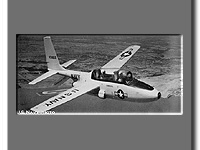
| Manufacturer: | Temco |
| |
| Base model: | TT | ||
| Designation: | TT | ||
| Version: | -1 | ||
| Nickname: | Pinto | ||
| Designation System: | U.S. Navy / Marines | ||
| Designation Period: | 1948-1962 | ||
| Basic role: | Trainer | ||


Specifications
| Not Yet Available |
Known serial numbers
Recent comments by our visitors
| John D St Clair Shores, MI | Damn but your wife is fat, marty. 04/24/2015 @ 14:33 [ref: 69050] |
| Marty Tibbitts Detroit, MI | Hi there, Pinto enthusiasts. World Heritage Air Museum (WHAM) operates N13PJ, one of 3 flying Super Pintos in the US. The Pinto is an extraordinary aircraft with a fantastic operating airspeed range. We do formation with gliders at 75 kts, and have pushed it to 350 kts (well under VNE).
When showing off at airshows we like to demo a short field take off. With the Pinto weighing in at 4400 lbs gross and having 2850 lbs thrust, we lift off in 250-400 feet. The performance is unbelievable! Marty Tibbitts 04/17/2013 @ 05:48 [ref: 67739] |
| J. Price Kilmarnock, VA | This aircraft was originally powered by continantal J-69 but later versions had a Ge J-85 12/19/2012 @ 07:39 [ref: 67428] |
| Mike Massimini , OH | I found this ...
http://articles.mcall.com/1999-07-29/news/3265913_1_navy-pilot-national-airlines-pompano-beach Clark died in 1999, apparently. He stayed in the navy long enough to serve in Vietnam. RIP, sir. 10/28/2012 @ 06:37 [ref: 67346] |
| John Kanuch Reno, NV | I was in the last class of Pinto Pioneers at Saufley Field in 1960. It was a dog, but I didn't know that until I went to Basic Training at Sherman Field. Didn't matter, I was going to be a jet pilot! My Primary instructor was Lt(jg) Lacey Collier. Got a ride in Mike Dillon's airplane in Scottsdale, AZ in June 2000. By that time I knew what "performance" was. It was awesome. The only downside, no air-conditioning and it was hot! 07/27/2011 @ 17:08 [ref: 43454] |
| Paul Hoffman Indialantic, Fl, FL | Earland (Earl) Clark (first solo of TT-1 in USA). He and I were buddies in grade school in East Stroudsburg, Pa. When I went off to Univ & graduated and lost him as I was officer in Navy flight training. We didn't see each other until 1966 in NATC, Pax River, Md, when I learned he quit college, joined service as enlisted, the was sent to Pensacola for flight training as a Cadet.
During my 3 decades of USN carrier combat flying, I never saw/heard about Earl again. Does anyone know his e-address, etc in 2011?? PS: TT-1 was a toooo early jet a/c for Pensacola in 1959-62. My many tours as Ext Test Pilot flew 39 different Xa/c - -but, TT-1 was already on it's way out of Navy. 06/24/2011 @ 06:13 [ref: 39750] |
| CPT MICHAEL M CONTI PAF MANILA, ME | I am an Officer and Pilot of the PAF and am also newly assigned at the PAF Research and Development Center and one of our proposal is to restore the Super Pinto prototype upon phase out of the F5's.
We would surely appreciate any help that you may share with us. God bless you all. Please try to reach me through kimoto169@yahoo.com or through +639175040169 Thanks everyone. 04/16/2009 @ 05:41 [ref: 24100] |
| Daniel Hammer , MD | Sir, I was told that both the Super Pintos sold to PAF were no longer flying and even dismantled? Is the PAF trying to re-vitalize this aircraft?
My Father was the Chief Engineer on the Super Pinto project in the 70's along with Test Pilot COL Richard Hunt (USAF RET), who flew the aircraft at the 1972 Abbottsford Airshow, and at TRANSPO '72 and the Reno air races. A new book is out from Schiffer Military press written by TT-1/Super Pinto expert Mark Frankel, FANTASTIC book! I first flew Mr. Mike Couches TT-1 in Oakland CA in the late 70's when my Dad and I were putting tip-tanks on for Mike, wow what a lot of fun for a 15 yr old kid! I have not flown a TT-1 since then but sure want to own one there are a few left in the US flying. Great Site! Daniel Hammer GySgt USMC (RET) 05/21/2008 @ 11:45 [ref: 20968] |
| Ent Sipen Manila, OTH | The prototype, known in the Philippine Air Force as, PAF T-610 Cali, has been shelved and is not being developed nor tested. The prototype, serial # 233, would have been a much needed boost for the under-equipped PAF without a fighter jet aircraft,in its inventory. The Cali is, at the very least, a jet trainer, much more sophisticated, than the Aermacchi S-211 the PAF uses now. Coincidentally, there is a very high attrition rate of the S211, of which the PAF has 4 operational aicraft, from the original 18 in its inventory back in the 90\'s. Any help is needed to further develop and hopefully,produce the Super Pinto/ Cali. 01/28/2008 @ 16:51 [ref: 19451] |
| Ray E Davenport Arlington, TX | Am delighted to have come upon tnis Aviation Enthusuasts Corner web page. Very interesting to read inputs from old friends of long ago, yet seems like yesterday. I also worked for B.J. Paschal as instrumentation technician during Temco Buckaroo Modification and from the word "Go"' on the TT-1 program. Installed strain gages and other instrumentation during assembly of the prototype. Was a Flight Test Tech. during all the Flight Test Program includeing Pax River, Md.
During testing a Greenville, Tx. was fortunate in geting a flight with the Temco Shuttle Pilot "Pappy" Meyres and can vouch for the fact that she was a very smooth little aircraft. Am Submitting a picture with some specs. on the Super Pinto with the CJ-610-6, 2950-lbs thrust power plant. This must have been a fantastic flying machine with over three times the power of the origonal and a rate of clime of 10,000-fps and redlined at 450-kt. These pictures were acquired from a friend Clyde Homb who served on the program as a Flight Maint. Crew Chief there at Temco and at Naval training at Pensecola. Understand he has a set of Maintenance Manuals also. Ray Davenport 817-561-6885 12/09/2007 @ 12:05 [ref: 18859] |
Recent photos uploaded by our visitors