

|
Description
| Notes: Upgraded T-2B. | |||
| Manufacturer: | North American (Rockwell) |
| |
| Base model: | T-2 | ||
| Designation: | T-2 | ||
| Version: | C | ||
| Nickname: | Buckeye | ||
| Designation System: | U.S. Tri-Service | ||
| Designation Period: | 1962-Present | ||
| Basic role: | Trainer | ||
| See Also: | |||



Specifications
| Length: | 38' 3" | 11.6 m | |
| Height: | 14' 9.5" | 4.5 m | |
| Wingspan: | 38' 1.5" | 11.6 m | |
| Wingarea: | 255.0 sq ft | 23.6 sq m | |
| Empty Weight: | 8,115 lb | 3,680 kg | |
| Gross Weight: | 13,177 lb | 5,975 kg | |
| Max Weight: | 13,190 lb | 5,981 kg | |
Propulsion
| No. of Engines: | 2 | ||
| Powerplant: | General Electric J85-GE-4 | ||
| Thrust (each): | 2,950 lb | 1,337 kg | |
Performance
| Max Speed: | 530 mph | 853 km/h | 461 kt |
| Climb: | 5,900 ft/min | 1,798 m/min | |
| Ceiling: | 45,500 ft | 13,868 m | |
Operators (Past and Present)
| USN | VF-43 | Oceana | VA |
| USN | VF-126 | Miramar | CA |
| USN | VT-4 | Pensacola | FL |
| USN | VT-10 | Pensacola | FL |
| USN | VT-19 | Meridian | MS |
| USN | VT-23 | Kingsville | TX |
Known serial numbers
Examples of this type may be found at
| Museum | City | State |
| Arkansas Air Museum | Fayetteville | Arkansas |
| Texas Air Museum | Slaton | Texas |
| USS Lexington Museum On The Bay | Corpus Christi | Texas |
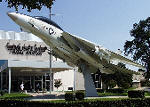
T-2C on display
Texas Air Museum | USS Lexington Museum On The Bay |
Recent comments by our visitors
| Jim Record , NY | Flew T-2's in VT-7, NAS Meridian & VT-4 NAS Pensacola 1970-'71 Plankholder in VT-19 (Flying Frogs) at NAS Meridian from December 1971 to 1976. Flew the A, B, & C models for 3000+ hours first as a student, then as as a "Plowback" SERGRAD Flight Instructor. On cross countries, ATC controllers always commented that they never had an aircraft fly so high, yet fly so slow! Great formation flying machine with few bad habits and a terrific spin trainer. 12/30/2013 @ 17:56 [ref: 68268] |
| J.Price Kilmarnock, VA | My sources indicate the reason for there being both red and green lights on the tip tanks is because the tanks are interchangeable form one side to the other. the lighting connectors should be keyed. 04/03/2013 @ 07:58 [ref: 67710] |
| LEES-CANTEL , OTH | Well, as an IP flying in the AJETS, I went to Kalamata (GR) to evaluate their phase IV training compared to French/Belgian syllabus.
We made several flights, low level, ACM. As I flew a lot of different A/C in my career, I wasn't very surprised by the plane itself till I tried to keep close formation!!!! The Greeks explained me that it was due to the angle between the engine and the fuselage... Anyway, they could have told it before!! I thought I didn't know how to fly in close!!! The second surprise went when initiating an immelman, starting low speed as flying an Alpha-jet, I tried to roll with full rudder to recover normal flight. Of course, speed was low (+/- 100kts), but the pilot in front's yell was a clear warning!!! Anyway, that was fun to ride that plane... But as a trainer, I wouldn't exchange a fouga vs a T2. Luis PS: In fact, the first big surprise about that plane was that the first time we went to the A/C, they made a stop to give us a PILLOW!!! I thought they were kidding when they gave me that accessory!!! I answer that I wasn't there to have a nap!!! 08/27/2012 @ 02:46 [ref: 66425] |
| AE1 Lontos PAX River, MD | My Squadron flies the T-2 as a chase plane for various projects. I have been wondering why the two position lights on each wingtip have both r3d and green? Nobody at work seems to know but it has been theorized that it is for going inverted but, that is just a guess. 09/27/2011 @ 05:01 [ref: 49259] |
| G.R.Ness Bismarck, ND | Naval flight student '67..VT-7 & 9 MCain Field, MS & VT-4 Pcola. Orders to IP VT-4 '69-'71. Best bird on the glide slope and a great gunner. Lt "Fleet" Chadwick taught me how to spin during IUTI and had a ball. Did the spin program for IUT after that. The gunnery phase at VT-4 was the best fun in training and was a great part of instructor work. CQ phase was the most professionally done..first time on the ball has to good.... right?..."attention to detail". With the retirment on the Buckeye all the aircraft I flew in the Navy are in Museums now...age is a wonder. 08/31/2011 @ 09:33 [ref: 48319] |
| MARCUS MCKEE BOULDER CITY, NV | I WAS IN VT-9 NAS MERIDIAN FROM 1974-1978. AIRCRAFT ELECTRICIAN AND TURN QUALIFIED. GOOD MEMORIES OF A GREAT AIRCRAFT AND GOOD SHIPMATES. 08/24/2011 @ 17:37 [ref: 48169] |
| Stephen Davies Medford, NY | Guppies for Peace!
I was assigned to VT-23 (Traron 23) at Kingsville Texas from Dec 1973 till June 1977. I was trained as an AMS but I worked in the Seat Shop, Inspection Branch and finally Airframes. The Buckeye was an amazingly easy aircraft to work on and maintain. Although many a night I would be out on the ramp changing out hydraulic pumps or hydraulic hoses laying in a pool of MIL-H-5606 with crickets and Lord knows what else crawling up my pants. Good times. I became turn qualified and a CDI. In early 1977 I got my seat shot and flight qualified as an inflight troubleshooter. It never occurred to me that my job was taking flights in "broken' T-2s. Scary thought now that I think about it. Had some great flights though. I think the Marine aviators loved to make me sick. On one gun hop (strafing the banner) I think I made it through one gun run before I had my mask off and my face buried in a barf bag the rest of the flight. I use to have to go out to the landing facility at NALF Beeville, Texas to fix and check out T-2s that experienced mechanical/hydraulic problems. It was fun driving through all these small Texas towns in our grey Navy pick-up truck, and everywhere we would stop to get a cold drink the locals would look at use and say, 'We didn't know there was any Navy bases in Texas.' Too funny. 06/17/2011 @ 05:56 [ref: 39652] |
| Rick Clinton, SC | I hate to see that VT-9 Squadron was not listed.I was an Aviation Electrician in VT-9 from Late 1973 until late 1977.I was fortunate to fly what was termed "Maintenance Skins".I flew in the back seat with the Squadron CO John B. Mckammey when we broke the accident free flight hours.Mr. Mckammey was a POW during Vietnam.I got to do a carrier landing and launch, which I'll never forget. 04/28/2011 @ 13:25 [ref: 37589] |
| walt bumgarner , WA | I IP at VT-4 1968-70. about 750 hrs in B/C's. Would fly to NAS Alameda for happy hour couple of times a month. Top off at 51,500 ft with most A/C. Fuel flow about 510 lbs per engine. Legs about 1,000 miles. Max indicated at that altitude
was about 221 kts indicated, stall about 209 kts. Very easy to fly. I landed on 2500 ft grass strips a few times....Engine easy to FOD. 02/25/2010 @ 22:53 [ref: 25789] |
| Jim Moran Libertyville, IL | I didn't see reference to the T2-J Buckeye and I'm not sure of the evolution of the different models. Additionally, the Navy plane model designation system changed along the way. I was part of BTG-9 flying T2V's in Pensacola when we transitioned to VT-4 with the introduction of the T2-J in early 1959. A lot of years ago...We eventually acquired 94 or 95 planes. Our squadron was among the first to begin flying the T2-J after delivery to the Navy began. Our sister squadron in Memphis received delivery about the same time. The plane develped a lot of descrepancies in those early days. I recall times when we had trouble keeping half of our 94 planes in the air. Things did improve with time. Had a chance to fly it and it was hot in comparison with our previous T2V's.
I was a plane captain refilling a real cockpit bail-out bottle in October 1960 when it exploded. Fortunately, the explosion blew me out between the rail and canopy and caused serious burn damage to both me and the plane. Attributed to a non-spec valve stem supplied as part of the bottle from the bottle manufacturer. Another time, I intentionally drove my tug into the path of a plane headed for take off and signaled the pilot to shut down the engine. It had a serious fuel leak and nobody seemed to notice. Often wondered what could have happend... 02/21/2010 @ 20:02 [ref: 25765] |
Recent photos uploaded by our visitors