

Home

Museums

Manufacturers

Mission

Airshows

Performers


McDonnell-Douglas F-4D 'Phantom II'

Description
Notes: Upgraded F-4C with improved avionics for AIR-TO-AIR and AIR-TO-GROUND operations.
  Manufacturer:McDonnell-Douglas
  Base model:F-4
  Designation:F-4
  Version:D
  Nickname:Phantom II
  Equivalent to: F-110A
  Designation System:U.S. Tri-Service
  Designation Period:1962-Present
  Basic role:Fighter
  See Also:

Specifications
  Length: 62' 10' 18.9 m
  Height:16' 6" 5.0 m
  Wingspan: 38' 5" 11.7 m
  Wingarea: 530.0 sq ft 49.2 sq m
  Empty Weight: 28,276 lb 12,823 kg
  Gross Weight: 50,341 lb 22,830 kg
  Max Weight: 58,000 lb 26,303 kg

Propulsion
  No. of Engines: 2
  Powerplant: General Electric J79-GE-15 (A/B 17,000Lb/7,711Kg)
  Thrust (each):10,900 lb 4,944 kg

Performance
  Range: 1,375 miles 2,214 km
  Cruise Speed: 587 mph 945 km/h 510 kt
  Max Speed: 1,459 mph 2,349 km/h 1,269 kt
  Climb: 48,300 ft/min14,721 m/min
  Ceiling: 59,400 ft 18,104 m

Known serial numbers
64-0929 / 64-0937, 64-0938 / 64-0963, 64-0964 / 64-0980, 64-0981 / 64-0996, 65-0580 / 65-0611, 65-0612 / 65-0665 , 65-0666 / 65-0770 , 65-0771 / 65-0801 , 65-0802 / 65-0817 , 66-0226 / 66-0283 , 66-7455 / 66-7504 , 66-7505 / 66-7650 , 66-7651 / 66-7774 , 66-8685 / 66-8698 , 66-8699 / 66-8786 , 66-8787 / 66-8825 , 67-0175 / 67-0207 , 67-14869 / 67-14876 , 67-14877 / 67-14884 , 68-6904 / 68-6911 , 68-6912 / 68-6919 , 650644

Examples of this type may be found at
MuseumCityState
Alabama ANG - 187th FW, MontgomeryMontgomeryAlabama
California ANG - 144th FW, FresnoFresnoCalifornia
DC ANG - 113rd FW, Andrews AFBAndrews AFBMaryland
Dyess Linear Air ParkDyess AFBTexas
Empire State Aerosciences MuseumScotiaNew York
Illinois ANG - 183rd FG, SpringfieldSpringfieldIllinois
Maxwell AFB Air ParkMaxwell AFBAlabama
Minnesota ANG - 148th FG, DuluthDuluthMinnesota
New England Air MuseumWindsor LocksConnecticut
New Jersey ANG - 108th ARW, TrentonMcGuire AFBNew Jersey
North Dakota ANG - 119th FG, FargoFargoNorth Dakota
Reflections of Freedom Historical Air ParkWichitaKansas
Texas ANG - 147th FG, HoustonHoustonTexas
USAF AcademyUSAF AcademyColorado
Vermont ANG - 158th FG, BurlingtonBurlingtonVermont
Wright-Patterson AFBWright-PattersonOhio

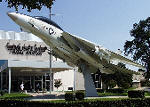
F-4D on display

DC ANG - 113rd FW, Andrews AFB

Empire State Aerosciences Museum

Maxwell AFB Air Park

Minnesota ANG - 148th FG, Duluth

New England Air Museum


Recent comments by our visitors
 Rick Smith
 Albemarle, NC
I was a Fire Control Tech In the 4th Tac Fighter Wing, 334th Tac Squadron at Seymour-Johnson AFB, Goldsboro, NC from 1967-1970. Served 6 months at Kunsan AFB, Korea from Febuary to August 1968. I worked on the APQ109 Radar, APA165 Missle control, Apa21 sight system and Bombing computer systems, Chuck Yeager was our wing commander when I arrived in 1967. We had all F4Ds. There was four squadrons 334th, 335th,336th,and 4th field Maintenance. We modified all our F4s to equip for the Walleye TV bomb by changing scopes from DVSTs to CRTs. The Walleye had a TV camara in it's nose,but once dropped you lost the video. The serial Number of Chuck Yeager's jet was 65-678, his name was on the side at the pilot's canopy. We also supported the 68th Bomb wing(a wing of B52s)also at Seymour-Johnson. It was a great Fighter/interceptor and I'm am very proud to had the priviledge of working on it and serving in the USAF. Thanks for the site
01/19/2010 @ 09:11 [ref: 25596]
 Dave Phillips
 Phoenix, AZ
Aaron, thanks for providing the well articulated history of the F4D.

However, I must take issue with you for slighting the historical reccord of the 366th TFW "Gunfighters" by not mentioning their lengthy deployment (1966-1972) to Da Nang RVN, a.k.a. "Rocket Alley", having moved there after only 5 months at Phan Rang. The 366th was the first combat unit in Vietnam to receive F4D's, and continued to fly them for the duration of their deployment.

By May 1968, the wing had upgraded to the F-4D aircraft. Having been assigned to the original 4520th (later redsignated 57th)FWW at Nellis AFB, where we had refined many of the tactics employing the new avionics on some of the original Block 25 F4D's, I was assigned to the 366th to help with the conversion from the F4C in October of 1967, just in time for the big Lunar New Year Party, TET, in January 1968. Oh, we had fun.

Between 1966 and 1972, the Gunfighters logged 18 confirmed MiG kills in Vietnam. By November 1971, the 366th was the only United States tactical fighter wing still stationed in Vietnam.

Upon the wing's returned to the United States in October 1972, Captain Lance P. Sijan, a 366th pilot shot down in 1967, was posthumously awarded the Medal of Honor for his actions as a prisoner of war.

Best of whishes to all who remember the Phantom

Dave Phillips
366th AEMS, 1967-68
08/12/2009 @ 23:59 [ref: 24337]
 Jim Gallagher
 , RI
Weapons Load crew member...then Load Crew Chief..10th TAC Fighter Sq. 50th TFW Hahn AFB'69-72

Old ugly...I think I still have some scars on my head from the main gear doors...and breather doors!!! Ya gotta love an airplane this powerful...and ugly...served with some of the greatest guys in the world..
01/01/2009 @ 12:04 [ref: 23397]
 Ray Stankewitz
 Fremont, CA
I was at Nellis AFB, 474th TFW, 430th TFS, 'Charlie' in the late 70's so I worked on a few of the birds in the photos below.
I was a 321X2P WCS mechanic so the pics of the radar extended and the mockup brought a few tears to my eyes. That was when a SSgt known as "CND" (could not duplicate) was in charge of the mockup.

Still have my red and white 430th cap. I have had the (mis)fortune to work on tail 66-7647 that came from Edwards AFB after they used it for several types of testing. This was around '78 or so. Nothing was right on that plane since it had spent its entire life @ Edwards before coming to Nellis.
11/22/2008 @ 09:27 [ref: 23124]
 Howard Spicer
 , NH
Was crew chief on F-4Cs in 70 and 71 at Yokota AB with TDYs to Osan and Kunsan. Went with Wild Weasels at Kadena in summer of 71. An interesting jod and time I will always fondly remember with lots of great friends.
Dan Sexton if you are still looking for a Phantom cap my wife found a nice F-4D cap on Collins Foundation website in there BX store.
10/10/2008 @ 06:24 [ref: 22821]
 Scott O\'Neal, JR.
 West Monroe, LA, LA
I flew as a WSO with the 9th TFS out of Holloman AFB, New Mexico from May '71 through July of '74. We made five deployments in that time; four to Germany as part of Creasted Cap exercises, and one to Takhli RTAFB, Thailand. My primary A/C was tail number 731,which I think the preface to the number was 63, but I'm not 100% sure of that.
My primary front-seat pilot was then-Captain J.P. Soden, but I also flew with multiple front-seaters, including Bill Wilson, Artie Morrow, Al Slobe, Jim Tucker, Steve Fairchild, George Koch, Jerry Stretch, R. C. Gravelee, and many others whose names have slipped my mind.
If anyone knows how to get in touch with any of these, please let me know at csoneal@yahoo.com. Thanks...
09/19/2008 @ 13:48 [ref: 22701]
 Dan Sexton
 Oshkosh, Wisconsin, WI
Stationed with the 53rd Squadron of the 36th Wing at Bitburg from 1967-69 in periodic dock. No doubt the greatest job I have ever had. It's a beautiful bird and having just watched the Raptor (F-22) at the Experimental Air Show here in Oshkosh, that old feeling returned every time the aircraft roared past. Just enjoy jet aircraft. Like a Phantom cap if anyone knows where to procure.
08/04/2008 @ 05:48 [ref: 22350]
 Aaron F. Robinson
 Wilmington, NC
The F-4D was an improved version of the F-4C which was better suited to the specific requirements of the Tactical Air Command. Although it was externally almost identical to the F-4C which preceded it in USAF service, it was very different internally.

The F-4D was authorized in March of 1964, and the first example flew on December 7, 1965. Deliveries began in March of 1966. The first deliveries were to the 36th Tactical Fighter Wing based at Bitburg in Germany. It was later followed by the 4th TFW based at Seymour Johnson AFB in North Carolina in January of 1967. A total of 793 F-4Ds were built for the USAF.

The F-4D had the same engines and basic airframe as the F-4C, and had the same internal fuel tankage as that of the RF-4C. The major difference was in the avionics. The most significant change was the replacement of the APQ-100 radar of the F-4C by the smaller and lighter partly solid-state AN/APQ-109A. This was part of the AN/APA-165 radar set which introduced an air-to-ground ranging mode using movable cursors. The F-4Ds fitted with the AN/APQ-109A radar set could be externally distinguished from the F-4C by the presence of a larger radome. However, some F-4Ds were fitted with the AN/APA-157 radar set group similar to that fitted to the F-4C and were hence externally identical to the F-4C.

The undernose pod for the AAA-4 infrared search and track was removed. The Collins ASQ-19 miniaturized communication/navigation/identification suite became standard. The Litton ASN-48 inertial navigation system of the F-4C was replaced by an ASN-63 set, which was upgraded and made lighter in weight. An AJB-7 all-altitude bomb delivery system was provided, which was connected to an ASQ-91 weapons release computer for delivery of laser-guided bombs.

The F-4D retained the AIM-7 Sparrow capability of the F-4C, but it deleted the Sidewinder capability on the inboard underwing pylon in favor of the Hughes AIM-4D Falcon infrared-homing missile. The AIM-4D (originally designated GAR-2B) had a launch weight of 134 pounds and had an maximum effective range of about 6 miles.

Starting with Block 27, the infrared search and track pod under the radome was reinstalled, but not to house the AAA-4 infrared search and track, but rather to carry the forward amplifier and antenna of the ALR-25/26 radar warning system. Later, this system was replaced by APS-107A with fin antennae and ALR-69(V)2 with antennae in the chin pod.

Externally-hung jammers that could be carried included the ALQ-87 FM barrage jammer, the Westinghouse ALQ-101 noise/deception jammer, and the Westinghouse ALQ-119 noise/deception jammer capable of covering three bands.

A multiple ejector rack was provided for the centerline pylon and triple ejector racks were provided for the inboard underwing pylon.

The weapons system officer in the back seat was often given a TV display fed from the seeker of a homing bomb system, initially for the GBU-8 and later for the GBU-15.

For weapons aiming, the F-4C had relied on a fixed sight and a simple chart on which it the image of the target was projected. The operation of this system made accurate bombing very difficult. The F-4D had improved avionics to increase the accuracy of its air-to-ground weapons. These included an AN/ASQ-91 weapons release computer system. This system measured various aircraft parameters such as speed, attitude, and climbing rate, and combined it with radar data on the slant range to the target to tell the bomb when to drop from the aircraft.

Also fitted was an AN/ASG-22 lead computing optical sight with amplifier and gyro. This system was designed to improve the effectiveness of the Phantom in air-to-air combat. The system combined information about speed, air density and angle of attack, and combined it with radar data about the velocity, direction and distance of the target to compute the lead angle needed to score a hit.

From the spring of 1967, the F-4D gradually began to replace the earlier F-4C in combat in Vietnam. It initially appeared over Vietnam with the 8th TFW, commanded by Lt.Col. Robin Olds. The first F-4D MiG "kill" took place on June 5, 1967, when crewmen Maj. Everett T. Raspberry and Capt. Francis Gullick shot down a MiG-17 near Hanoi. The F-4D eventually destroyed 45 enemy aircraft, and the USAF's 3 Vietnam-era aces got their fifth kills in F-4Ds during the Linebacker campaign of 1972. Captain Steve Ritchie of the 432nd TFW got his fifth kill in F-4D number 66-0167 on August 18, 1972.

However, the infrared Falcon proved relatively unsuccessful in air-to- air combat in Vietnam, shooting down only four MiG-17s and one MiG-21 between October 26, 1967 and February 5, 1968. The Falcon was definitely not a good dogfighting missile, having been originally designed back in the 1950s for bomber interceptions. One of the basic problems in using the Falcon for dogfighting was that its aerodynamic design made for relatively limited maneuverability. The moveable surfaces at the end of the four delta wings of the Falcon did not provide sufficient aerodynamic force for the rapid changes of direction that were required to be effective against highly-maneuverable fighters.

The Falcon also proved to be somewhat temperamental in service, requiring a lot of careful setting up and tweaking. In addition, the Falcon had a tendency to cause engine flameouts when fired. Perhaps the most significant problem with the AIM-4D was that its fire control system required 6-7 seconds to actually launch the missile after the firing button was pushed, which is an eternity in a dogfight. The internal systems and aerodynamic surfaces of the Falcon were powered by an internal turbo-alternator and hydraulic power unit which was driven by a gas generator. This system took a few seconds to spin up and take over control from the aircraft fire control system. Also, the analog computers in the fire control system had to calculate several pre-launch attack parameters and had to pass them along to the missiles' guidance system, which also took a second or two.

Thirdly, the Falcon required a direct hit to explode, since there was no proximity fuse. The leading edges of the four delta wings were made of fibreboard, and the intent was that upon impact the missile would bury itself in the fuselage of the target up to the midpoint of the missile's wing. The fibreboard would then crush, completing a circuit and detonating the warhead. Another problem was that the explosive warhead was quite small, only about 4 pounds.

Consequently, combat pilots in Vietnam were very uncomplimentary about the Falcon. As a result of the barrage of complaints from the field, the Sidewinder capability on the inboard underwing pylons was hastily restored. However, in fairness to the Falcon, virtually ALL of the early air-to-air missiles proved to be troublesome in Vietnam and less deadly to enemy aircraft than anticipated.

In later years, the absence of an internal cannon was seen as a liability in close-in air-to-air combat. The F-4D could carry an external centerline SUU-23 pod containing an M-61A1 cannon, but it was bulky, provided lots of drag which seriously compromised performance, and was rather inaccurate to boot. In addition, the cannon pod took up valuable real estate underneath the fuselage, markedly reducing the offensive load that could be carried.

The Westinghouse AN/ASQ-152(V)-2 Pave Spike laser target designator was fitted to several F-4Ds. The cylindrical Pave Spike laser designator pod was mounted inside one of the Sparrow missile wells on the fuselage underside. The system used television optics, which made it daylight-capable only. Those Pave Spike aircraft which had the capability of launching the AGM-65 Maverick air-to-surface missile included 66-7509, 7531, 7546, 7634, 7661, 7722, 7746, 8819, and 8821.

The AN/AVQ-10 Pave Knife laser target designator could be carried on the inboard underwing pylon of specially modified F-4Ds. This pod had a stabilized head housing a boresighted TV camera and laser designator. It had a low-light television system, which made nighttime missions theoretically possible, although it is not certain that this was ever done. Attempts were made to slave the pod's optics to the aircraft radar, but these were not successful. The system operated by having the pod look in the same direction as the pilot's bomb sight, with the weapons system officer then finding the target on his monitor screen as the pilot pointed his aircraft at it. Pave Knife aircraft included 66-7652, 7674, 7675, 7679, 7681, 7707, 7709, 7743, 7760, 7766, and 7773. Combat missions with the Pave Knife began on May 23, 1968, initially in conjunction with the GBU-10/B laser-guided bomb. All Pave Knife aircraft were assigned to the 433rd TFS of the 8th TFW. Perhaps the most spectacular use of the Pave Knife was the dropping of a span of the Paul Doumer Bridge near Hanoi on May 10, 1972. This bridge had survived literally hundreds of previous attacks.

Two F-4Ds (66-8738 and 66-8812 were fitted with the AVQ-11 Pave Sword precision attack sensor. This consisted of a modified AIM-9 Sidewinder seeker head as a laser spot tracker for targets designated by AVQ-12 Pave Spot laser designators carried by O-2As. The system was mounted inside a modified SUU-11 gunpod that was suspended from the right-forward Sparrow well or from the right inboard underwing pylon.

F-4D number 66-8700 received the Pave Fire system mounted in a centerline pod. This system was supposed to use low-light level television and laser ranging equipment to perform dive-toss bombing missions at night. In such a mission, the attacking aircraft was supposed to dive on the target from a medium altitude, acquire and designate the target, then pull up before releasing its "dumb" bombs. However, the designation of the target was found to be more tricky than expected, and the Pave Fire system was never very successful, and only one Phantom was so modified.

The AVQ-9 Pave Light laser designator was fitted to 65-0597, 0609, 0612, 0642, 0677, 0706, 0786, and 66-8814, 8815, 8817, and 8823. This designator was mounted on the left side of the rear canopy frame of the F-4D. In order to use the system, the pilot had to fly in a left turn around the target and shine the laser while other aircraft attacked it. If an emergency escape proved to be necessary, the WSO first had to demount and store the designator before he could safely eject. Aircraft fitted with the Pave Light system were assigned to the 8th TFW.

AN/ARN-92 LORAN-D equipment was fitted to Pave Phantom F-4Ds. They could be identified by a rather prominent "towel-rail" antenna on the upper rear fuselage behind the rear cockpit. A total of 72 aircraft from blocks 32 and 33 were so equipped. In Vietnam, the primary mission of these Pave Phantom F-4Ds was the seeding of the Ho Chi Minh trail with sensors, which required the precise nighttime navigational capability provided by LORAN. The primary operators of the "towel-rail" F-4Ds were the 25th and 497th TFS of the 8th TFW and the 555th TFS of the 432nd TFW. Subsequently, these planes were passed along to the 457th TFS of the 301st TFW, the 23rd TFS of the 52nd TFW, and the 704th TFS of the 924th TFG.

The Combat Tree modification of 1968-69 permitted the retention of a full missile load while carrying electronic countermeasures gear. It did this by adding an attachment point for a countermeasures pod on the inboard pylon, which could now carry two more AIM-9J Sidewinder missiles on each side.

Under the Pave Arrow program, two F-4Ds were equipped with a Sidewinder infrared seeker mounted in a fixed pod for locating heat sources from ground targets.

The designation EF-4D was given to four F-4Ds modified for the Wild Weasel IV/V SAM suppression role. 65-0657 and 65-0660 were fitted with the AN/APS-107 radar homing and warning system and a target acquisition system for AGM-78 Standard anti-radiation missiles. 66-7635 and 66-7647 served as test beds for the AN/APS-38 warning and attack system developed by McDonnell Douglas and later adopted for the F-4G.

The F-4D served with the following Air Force Wings:


3rd Tactical Fighter Wing, Kunsan AB, Korea, 1971-1974. 35th TFS, 36th TFS, 80th TFS.


4th Tactical Fighter Wing, Seymour Johnson AFB, NC, 1967-1970. 334th TFS, 335th TFS, 336th TFS. Deployments to Kunsan AB, Korea


8th Tactical Fighter Wing, Ubon RTAFB, Thailand. 433rd TFS, 435th TFS, 497th TFS, 555th TFS(1967-1968)


12th Tactical Fighter Wing, Phu Cat AB, South Vietnam. Assumed control of the former 37th TFW and its F-4Ds flown by the 389th TFS,and 480th TFS. Inactivated Nov 1971.


18th Tactical Fighter Wing, Kadena AB, Okinawa. 25th TFS (1975-1979). Several detachments to Korat RTAFB, Thailand. Inactivated Aug 1980.


31st Tactical Training Wing, Homestead AFB, FL, 1981-1987. 306th TFTS, 307th TFTS, 309th TFTS.


33rd Tactical Fighter Wing, Eglin AFB, FL


35th Tactical Fighter Wing, Phan Rang AB, Thailand


36th Tactical Fighter Wing, Bitburg AB, Germany. Elements of the 36th flew F-4Ds between 1966 and 1973.


48th Tactical Fighter Wing, RAF Lakenheath, UK. Assets reassigned to 474th TFW at Nellis AFB, NV.


49th Tactical Fighter Wing, Spangdahlem, AB, Germany.


50th Tactical Fighter Wing, Hahn AB, Germany, 10th TFS, 496th TFS.


52nd Tactical Fighter Wing, Spangdahlem AB, Germany. 480th TFS (1976-1980).


54th Tactical Fighter Wing, Kunsan AB, Korea. Activated Jun 1970, taking place of 354th TFW. Inactivated Oct 1970.


56th Tactical Fighter Wing, MacDill AFB, FL, 1978-1980


57th Fighter Weapons Wing, Nellis AFB, NV. 414th FWS (until 1971)


81st Tactical Fighter Wing, RAF Bentwaters, UK. 78th TFS (1966-1979) 91th TFS (1973-1979), 92nd TFS (1973-1979)


354th Tactical Figher Wing, Kunsan AB, South Korea. 560th TFS, 33rd TFS, 335th 16th TFS, 478th TFS. Wing assets passed to 54th TFW Jun 1970, when wing transferred to Myrtle Beach AFB, SC with A-7Ds.


366th Tactical Fighter Wing, Holloman AFB, NM. 389th TFS, 390th TFS, 480th TFS. Operated F-4D from 1968 to 1972. Deployments to Phu Cat AB, Vietnam, Takhli RTAFB, Thailand.


388th Tactical Fighter Wing, Korat RTAFB, Thailand. 34th TFS(1974) 35th TFS (1972). Reassigned to Hill AFB, Utah Dec 1975, and acquired 4th TFS, 34th TFS, and 421th TFS. Convertd to F-16 Jan 1979.


401st Tactical Fighter Wing, Torrejon AB, Spain, 1978-1983.


405th Fighter Wing, Clark AB, Philippines. 1st Test Squadron (1970), 523rd TFS (1970-1973(inactivated)), 90th TFS (1973-1973). 64th FIS and 509th FIS operated F-102s. Detachments to Taiwain, Thailand, South Vietnam. Replaced by the 3rd TFW in Sept 1974.


432nd Tactical Reconnaissance Wing, Udorn RTAFB, Thailand. 13th TFS equipped with F-4Ds in Oct 1967. Redesignated 432nd Tactical Fighter Wing Nov 1974. Inactivated Nov 1975.


474th Tactical Fighter Wing, Nellis AFB, NV. 428th TFS, 429th TFS, 430th TFS. Acquired Lakenheath F-4Ds in 1977, and flew them until converting to F-16s in 1982


475th Tactical Fighter Wing, Misawa AB, Japan. Inactivated when assets were used to reform the 3rd TFW in Mar 1972, and 475th inactivated.


479th Tactical Fighter Wing, George AFB, CA. 1965-1972. Re-equipped with F-4Es in 1972.
As part of the Shah's ambition to turn Iran into a major world power, the Nirou Havai Shahanshahiye Iran (Imperial Iranian Air Force) placed a order for 16 F-4Ds in 1967. A second batch of 16 more F-4Ds was later ordered. The first F-4Ds arrived in Iran on September 8, 1968, with a total of 32 F-4Ds being ultimately delivered to the Imperial Iranian Air Force. They were later supplemented by large batches of F-4Es and RF-4Es, which made Iran the third-largest operator of the Phantom after the USA and Israel. Iranian F-4Ds were used in unsuccessful attempts to intercept Soviet MiG-25s that were spying on Iran. Their first combat use was in 1975 when Iran provided assistance to the Sultan of Oman in action against rebels. One of these was lost to ground fire. With the overthrow of the Shah in 1979 by the Islamic fundamentalist revolution, the shipment of spare parts for Iranian Phantoms was embargoed, and many planes had to be cannibalized to keep others flying. However, some spare parts have managed to sneak into Iran from Israel and from some NATO countries. When Iraq attacked Iran in September of 1980, only 40 percent of the Iranian Phantom force was operational due to a shortage of replacement parts.

In 1968, the Republic of Korea, having gotten rather nervous about border clashes with North Korea, ordered an initial batch of 18 F-4Ds. This order was filled using aircraft drawn from from existing USAF stocks rather than by new construction. The first four F-4Ds arrived in Korea in August of 1969. Eventually, at least 42 ex-USAF F-4Ds were transferred to South Korea, the last being delivered in 1988.

In the early 1980s, F-4Ds began to reach Air Force Reserve units. The units obtaining the F-4D included:


89th TFS, 906th TFG


93rd TFS, 482nd TFW


457th TFS, 301st TFW


465th TFS, 507th TFG


704th TFS, 924th TFG
By the late 1980s, most of the AF Reserve units had exchanged their F-4Ds for F-16A/Bs. The last AF Reserve unit to use the F-4D, the 482nd TFW, converted to F-16A/Bs in November of 1989.

In the late 1970s and early 1980s, ex-USAF F-4Ds began to reach the Air National Guard. The first ANG unit to operate the F-4D was the 178th FIS of the 119th FIG of the North Dakota ANG, which got its planes in March of 1977. ANG F-4Ds served both in the tactical fighter role and in the interceptor role. The following ANG units are known to have operated the F-4D:


111th FIS, 147th FIG, Texas ANG


121st FIS, 113th TFW, District of Columbia ANG


127th FIS, 184th TFG, Kansas ANG


128th FIS, 116th TFG, Georgia ANG


134th FIS, 158th TFG, Vermont ANG


136th FIS, 107th FIG, New York ANG


141th TFS, 108th TFW, New Jersey ANG


160th TFS, 187th TFG, Alabama ANG


170th TFS, 18erd TFG, Illinois ANG


171st FIS, 191st FIG, Michigan ANG


177th TFTS, 184th TFG, Kansas ANG


178th FIS, 119th FIG, North Dakota ANG


179th FIS, 148th FG, Minnesota ANG


194th FIS, 144th FIW, California ANG
During the early 1990s, the F-4Ds in the ANG were all withdrawn from service and replaced by F-16s. By 1992, the last F-4Ds had been withdrawn from the fighter interceptor groups of the Air National Guard.

No F-4Ds remain in service with any unit of the USAF or the Air National Guard. However, numerous F-4Ds remain flying with the Republic of Korea Air Force. It is uncertain how many F-4Ds remain in service in Iran, but probably most are by now grounded due to the lack of spare parts and are no longer serviceable.


F-4D serials:
64-0929/0937 McDonnell F-4D-24-MC Phantom
64-0938/0963 McDonnell F-4D-25-MC Phantom
64-0964/0980 McDonnell F-4D-25-MC Phantom
65-0580/0611 McDonnell F-4D-26-MC Phantom
65-0612/0665 McDonnell F-4D-27-MC Phantom
65-0666/0770 McDonnell F-4D-28-MC Phantom
65-0771/0801 McDonnell F-4D-29-MC Phantom
66-0226/0283 McDonnell F-4D-29-MC Phantom
66-7455/7504 McDonnell F-4D-29-MC Phantom
66-7505/7650 McDonnell F-4D-30-MC Phantom
66-7651/7774 McDonnell F-4D-31-MC Phantom
66-8685/8698 McDonnell F-4D-31-MC Phantom
66-8699/8786 McDonnell F-4D-32-MC Phantom
66-8787/8825 McDonnell F-4D-33-MC Phantom
67-14869/14876 McDonnell F-4D-35-MC Phantom (for Iranian AF)
67-14877/14884 McDonnell F-4D-36-MC Phantom (for Iranian AF)
68-6904/6911 McDonnell F-4D-37-MC Phantom (for Iranian AF)
68-6912/6919 McDonnell F-4D-38-MC Phantom (for Iranian AF)


Specification of the F-4D:
Engines: Two General Electric J79-GE-15 turbojets, 10,300 lb.s.t dry, 17,000 lb.s.t. with afterburner. Performance: Maximum speed 1432 mph at 42,000 feet (Mach 2.17), 826 mph at sea level (Mach 1.08). Cruising speed 587 mph. Landing speed 165 mph. Inital climb rate 40,100 feet per minute. Service ceiling 55,850 feet. Combat range 502 miles, maximum range 1844 miles with maximum external fuel. Weights: 28,958 pounds empty, 51,577 pounds gross, 38,781 pounds combat weight, 59,380 pounds maximum takeoff weight. Dimensions: Wingspan 38 feet 5 inches, wing area 530 square feet, length 58 feet 3 3/4 inches, height 16 feet 3 inches. Fuel; Maximum internal fuel in the fuselage tanks was 1260 gallons. An additional 630 gallons of fuel could be carried in internal tanks inside the wings. Maximum external fuel load was 600 US gallons in a centerline tank that could be carried underneath the fuselage plus 370 US gallons in each of two tanks that could be carried underneath the outer underwing pylons, bringing total fuel load to 3230 US gallons. Armament: Armament consisted of four AIM-7 Sparrow semi-active radar homing air-to-air missiles in semi-recessed slots in the fuselage belly, plus two to four AIM-9 Sidewinder infra-red homing air-to-air missiles carried under the wings on the inboard pylons. A total offensive load of up to 16,000 pounds could be carried on the centerline and four underwing hardpoints.


07/16/2008 @ 09:13 [ref: 22151]
 PWait
 , NC
I was a sparkchaser on RF's @ Bergstrom from 79-81 & D Models @ the Kun from 81-82. My back is still killing me......................
06/18/2008 @ 16:55 [ref: 21550]
 Jeff Weddle
 , IN
Worked C's, D's, and RF's at Kadena from Summer 76 to Spring 78. First bird and favorite bird of my whole career. Whenever I pass an air museum where one is on display, I usually stop to walk around it at least one time. Many fond memories.
02/29/2008 @ 07:02 [ref: 19813]


Recent photos uploaded by our visitors